Share
Hazel Chu opens up about feeling lonely after breast cancer diagnosis
Published 11:15 30 Sept 2025 BST
Updated 12:04 30 Sept 2025 BST
 Add us as a preferred source on Google »
'I felt a surge of loneliness and fear'
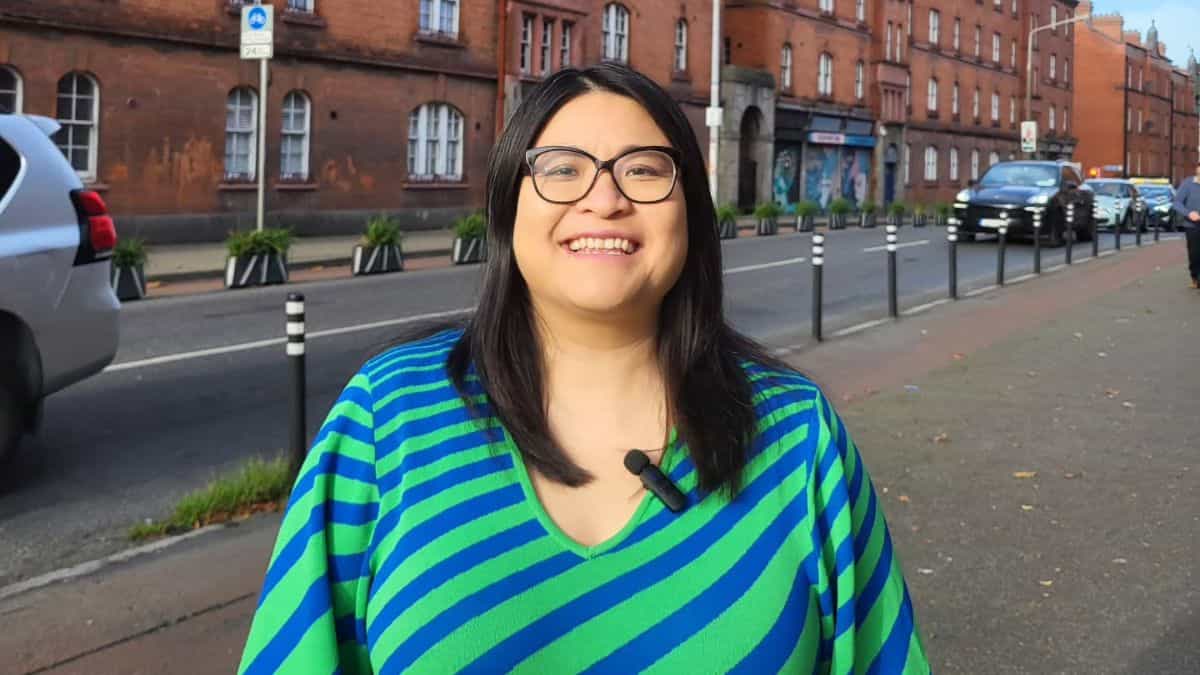
Hazel Chu, former Lord Mayor of Dublin, has a history of breast cancer in her family, but didn't immediately assume the worst when she happened to come across a small lump on one of her breasts.
Hazel wrote in the Irish Times: "I figured it was a blocked duct and waited for it to pass," explaining that she was too preoccupied with work, life, and summer camps for her to pay lots of attention to it.
However, the politician did seek doctoral advice and was later referred to St Vincent's Breast Check, which told her there was a pile-up of appointments and the turnaround time would therefore be longer than usual.
Hazel eventually underwent a triple assessment, which consists of a clinical exam, a mammogram, and an ultrasound biopsy.
After her mammogram, Hazel was told that they had found a 'blob', however, at this point, they would need to examine it more thoroughly to determine whether it was benign or malignant.
"At no point was I sure what would happen next, apart from waiting. That’s the difficulty with cancer, there are lots of unknowns and uncertainties, and you can’t know the next step for definite until this one is finished," she goes on to write.
The former Lord Mayor explains that the hardest part about battling an illness is 'the fear of the unknowns, and your mind running through every best- and worst-case scenario'.
When Hazel and her husband Patrick Costello TD were told that while they were dealing with cancer, it was caught in the early stages, they 'breathed a sigh of relief'.
After the diagnosis, Hazel thought she would be 'done and dusted' with treatment after two months.
What followed for Hazel was an MRI and MRI biopsies, which she 'wouldn't wish upon her worst enemy', adding that the MRI picked up things which the ultrasound and the mammogram could not.
"I came out of the scan, sat in reception, and cried," she wrote.
"It was the first time I cried properly since my diagnosis, without any symptoms, it was the first time I realised I was sick."
"I felt a surge of loneliness and fear," she says. "No matter how much support you have, no matter how many people love you, inevitably you are alone when sick, since you are the one dealing with it."
The results of the MRI showed that various spots were cancerous.
Even though the cancer was still in its early stages, Hazel and Patrick decided to have the difficult conversation with their seven-year-old daughter, telling her about her mother's diagnosis.
Hazel recalls one particular moment when she felt lucky to be able to comfort her young daughter when she asked her if she was going to die.
Earlier this month, Hazel had her breasts removed, opting for breast-conserving surgery over a mastectomy.
Hazel explains that doctors kept advising her on aesthetics and plans, but she kept saying, "I just want it done".'
The politician described the operation as 'intense' and says she feels a 'massive sense of loss as I look at the scars and wish I hadn't lost parts of me'.
If the results turn out to be originally diagnosed, Hazel is set to begin a month of daily radiotherapy soon, however, if they're not, then she could undergo chemotherapy.
Hazel has kept busy with work over the past couple of months, writing: "Cancer is tough, but it doesn’t render us useless or diminish us."
According to Breast Cancer Ireland, Ireland sees 3,600 new cases diagnosed yearly
One in nine women will develop breast cancer in their course of their lifetime, with male breast cancer one in 1,000.
Women between the ages of 20 and 25 account for 23% of women diagnosed, while 34% of women are diagnosed between the ages of 50 and 69.
Meanwhile, 36% of women are diagnosed over the age of 70.
How to check your breasts:
It is important to check your breasts once a month, according to the Marie Keating Foundation.
The week after your period has ended is the best time to perform a self-exam. If you are in menopause, check your breasts around the same time every month.
Check your breasts in front of a mirror so you can look for changes. Look for:
- If one of your breasts has gotten larger or lower.
- Remember that it is normal for your breasts to be different sizes. You are looking for a change in size of one of your breasts.
- If any veins stand out more than usual for you
- Puckering, dimpling or redness of the skin
- Check nipples for any changes such as redness, crusting, or change in shape or direction
Some women also find it more comfortable to check their breasts while they are in the shower so that they can feel for changes.
Check for:
- Lumps
- Thickening of breast tissue
- Bumpy areas that seem different from other breast tissue
Remember, check your armpits and collar bone.
If you are not sure how to check your breasts, ask your GP or practice nurse next time you are visiting. There is no shame or judgement when it comes to our health.
According to the HSE, breast cancer symptoms can include:
- a lump in either breast
- a change in the size or shape of one or both breasts
- dimpling on the skin of your breasts
- a lump or swelling in either armpit
- bloodstained discharge from either nipple
- a rash on or around your nipple
- a change in the appearance of your nipple, such as becoming sunken into your breast
The HSE urges anyone with symptoms of breast cancer to see a GP right away.
Breast screening in Ireland
People from the ages of 50 to 69 will be offered breast screening every two years, and the first invitation depends on when screening is available in your area.
This is normally within two years of a person’s 50th birthday (Due to COVID-19, some may be 53 when they get their first invitation).
Details should automatically be on the register.
However, if you fall under this age bracket and did not get a letter, check your name is on the breast screening register, or call the Freephone number on 18004545 55.
If you are not between the age 50 and 69, you are not eligible for breast screening but should contact your GP immediately should you have any of the above symptoms.
Explore more on these topics: