parenting
Share
Confident, hands-on dads ‘raise better-behaved children’
Published 18:00 6 Jan 2018 GMT
Updated 18:23 6 Jan 2018 GMT
 Add us as a preferred source on Google »
Dads who fully embrace new fatherhood and play an active role in raising their baby have better behaved children later on.
That's according to the latest study from Oxford University, which showed that how new dads feel about parenthood and whether or not it makes them feel closer to their partner are powerful predictors of positive behaviour in the child at age 11. Simply being available for childcare or household chores is not enough. The study, using data taken from the Avon Longitudinal Study of Parents and Children in South West England, involved more than 10,000 children living in a household with both a mother and father.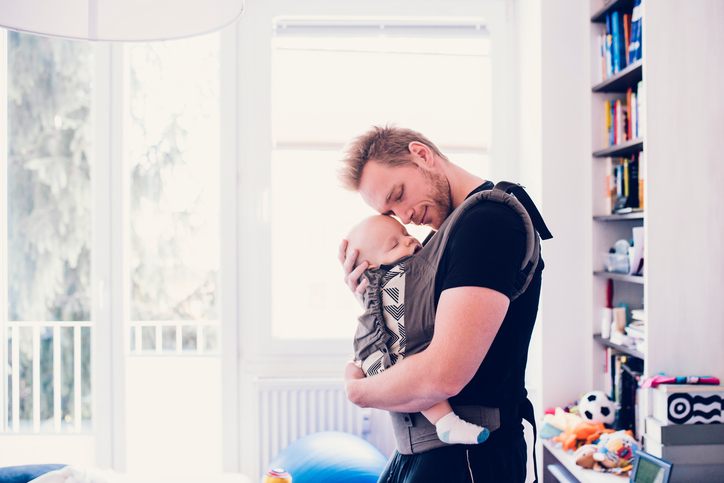 Parents were asked to complete a questionnaire about their mental health and that of their child, their attitudes to parenting and time spent with their baby and fathers' moods and feelings in the post-partum period at eight weeks and eight months-old.
Nine years later, the same families were asked to complete questionnaires on their child's behaviour and social skills, filling them out one last time when the child turned eleven.
The results showed that the children whose fathers were the most confident and emotionally responsive at the start of their lives were up to 26 per cent less likely to experience behavioural issues than the children whose dads were less involved.
The study authors believe positive parenting by fathers may contribute to good outcomes in children in a number of ways:
Parents were asked to complete a questionnaire about their mental health and that of their child, their attitudes to parenting and time spent with their baby and fathers' moods and feelings in the post-partum period at eight weeks and eight months-old.
Nine years later, the same families were asked to complete questionnaires on their child's behaviour and social skills, filling them out one last time when the child turned eleven.
The results showed that the children whose fathers were the most confident and emotionally responsive at the start of their lives were up to 26 per cent less likely to experience behavioural issues than the children whose dads were less involved.
The study authors believe positive parenting by fathers may contribute to good outcomes in children in a number of ways:
"Involved fathers may influence children indirectly by being a source of instrumental and emotional support to mothers who provide more of the direct care for children." the team, led by Dr Charles Opondo, stated in their report. "The potential positive effect of this on mothers' well-being and parenting strategies may then lead to better outcomes in children." "How new fathers see themselves as parents, how they value their role as a parent and how they adjust to this new role, rather than the amount of direct involvement in childcare in this period, appears to be associated with positive behavioural outcomes in children."There is also evidence that fathers' involvement can also alleviate the impact of factors such as maternal depression, which are known to increase children's risk of behavioural problems. Greater paternal involvement may also lead to or be a manifestation of a happier and more cohesive family, and this may also help children to develop and grow in a supportive environment.