parenting
Share
“Pre Covid-19 we were a tag team of drops and pick-ups.” An Irish mum’s honest account of finding the new normal, and how the virus crisis has brought her family closer in many ways
Published 14:00 16 Apr 2020 BST
 Add us as a preferred source on Google »
"If ever there was a time to keep the goal of 'good enough' in focus, that time is now."
Dr Eithne Hunt is an Occupational Therapy lecturer at UCC and a mum of one. You can follow her on Twitter here. Below, she reflects on the changes to her family's routine since the Covid-19 crisis began and how they've found their new normal.... My email inbox and Twitter feed have been overflowing with advice for how to cope with our new lived reality of COVID-19 – all of it well intended, much of it helpful, some of it based on scientific evidence. Initially, I went into a tailspin of reading, scheduling, planning. Then, I crashed. From the debris came the realisation that, much like the barrage of expert advice offered to first-time parents, in time – through trial and error, persistence, patience, more error, more persistence, more error – we figure out what works best for us; that, in fact, we, ourselves, are the experts of our lives. And so, I reflect here on what’s been working in our family since the school closures last month. (For context, my husband is self-employed and is working at home, trying to keep his business afloat. I work full-time and am working remotely as best I can. Our son is 10 and sports-mad; usually busy with school, homework, GAA, soccer and cubs. We are extremely fortunate to have a comfortable, happy home; decent garden, and no immediate financial worries). We’ve figured out a schedule of sorts that seems to be mostly working. There is one hour of school/project work. We are not 'home-schooling'. Our school principal wrote a wise and heartfelt message on the school website, essentially saying that wellbeing trumps academics. I couldn’t agree more. [caption id="attachment_375848" align="alignnone" width="999"] Dr. Eithne Hunt[/caption]
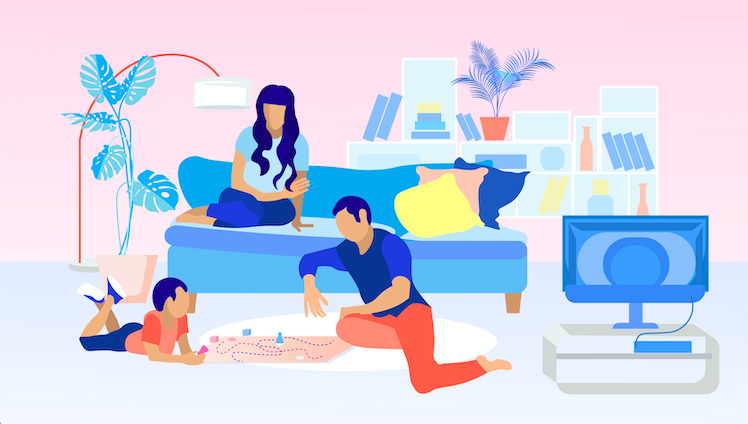
Our son reads books and soccer magazines, plays Monopoly and Scrabble with us, plays outside, does some jobs around the house (he has learned to hoover and change bedclothes, make his lunch – all very important life-learning!). Surprisingly, I am enjoying doing GAA drills with him. We are baking twice a week. Tuesday’s recipe is healthy, Friday’s not so much.
Our son has a good deal more screen time than previously. We have revised our original Christmas time decision of “no FIFA online”, and now he is allowed play online with some friends and it is great to hear them chat.
Before doing so, he had called his best friend on WhatsApp video one day, but he found they didn’t have much to say. Much of their usual conversation is anchored in shared activities like school, playing soccer and discussing the latest Premier/Champions League results. Boys are probably less likely to “just chat” with their friends.
Christine Carter, an American sociologist and author of the The New Adolescence, notes how it can easily happen that family members retreat behind individual screens and devices. With that in mind, we now watch TV together for an hour in the evening, taking turns to choose what we view.
Pre Covid-19, competing activities and conflicting interests meant we were usually a tag team of drops and pick-ups, with evening activities and late working. If my husband and son were watching live soccer on TV, I would escape to a different room with my Kindle. Now, I’m trying to see watching Match of the Day repeats as an investment in my family.
While we have consciously changed our decisions on some aspects of technology use, we hold firm to other family rules: one screen at a time, no screens in bedrooms or at the table. Our son’s bedtime routine is largely unchanged, also. Now more than ever, his nightly “thankfuls” are a reminder to us of how lucky we are and how it’s often little things that have a big impact on his day.
Dr. Eithne Hunt[/caption]
Our son reads books and soccer magazines, plays Monopoly and Scrabble with us, plays outside, does some jobs around the house (he has learned to hoover and change bedclothes, make his lunch – all very important life-learning!). Surprisingly, I am enjoying doing GAA drills with him. We are baking twice a week. Tuesday’s recipe is healthy, Friday’s not so much.
Our son has a good deal more screen time than previously. We have revised our original Christmas time decision of “no FIFA online”, and now he is allowed play online with some friends and it is great to hear them chat.
Before doing so, he had called his best friend on WhatsApp video one day, but he found they didn’t have much to say. Much of their usual conversation is anchored in shared activities like school, playing soccer and discussing the latest Premier/Champions League results. Boys are probably less likely to “just chat” with their friends.
Christine Carter, an American sociologist and author of the The New Adolescence, notes how it can easily happen that family members retreat behind individual screens and devices. With that in mind, we now watch TV together for an hour in the evening, taking turns to choose what we view.
Pre Covid-19, competing activities and conflicting interests meant we were usually a tag team of drops and pick-ups, with evening activities and late working. If my husband and son were watching live soccer on TV, I would escape to a different room with my Kindle. Now, I’m trying to see watching Match of the Day repeats as an investment in my family.
While we have consciously changed our decisions on some aspects of technology use, we hold firm to other family rules: one screen at a time, no screens in bedrooms or at the table. Our son’s bedtime routine is largely unchanged, also. Now more than ever, his nightly “thankfuls” are a reminder to us of how lucky we are and how it’s often little things that have a big impact on his day.
 Our schedule carves out time for solo activities for each of us to get our respective jobs done. We also need some solo down-time. My husband and I each get out for a walk on our own. He and I are having some Zoom meet-ups with our friends.
I think a lot about American pre-school kids’ TV presenter Fred Roger’s advice for helping children process frightening news – to always look for the helpers. We are making a point of sharing good news stories and videos with our son, reinforcing the great service and kindness we are witnessing in our community, and how he and we can contribute to that.
I am not able to work full-time. I am working to the maximum extent possible. For me, this means adjusting my expectations for what is doable. I’m finding most work tasks taking much longer than I anticipated, because my concentration is reduced: I don’t have a designated work space, and working fully online is new to me. I’m prioritising maintaining connections with my students; I’m certainly not getting to progress my own research at this time, and I am definitely not painting skirting boards or clearing out the attic.
When the week goes mostly according to plan, then we have “fun Fridays” which can mean pyjamas all day, relaxed screen time rules, Rice Krispies for breakfast (and lunch), pizza on the couch for tea. These are extraordinary times, and it is not business as usual. We are all just doing our best to get through, day by day. If ever there was a time to keep the goal of “good enough” in focus, that time is now.
Our schedule carves out time for solo activities for each of us to get our respective jobs done. We also need some solo down-time. My husband and I each get out for a walk on our own. He and I are having some Zoom meet-ups with our friends.
I think a lot about American pre-school kids’ TV presenter Fred Roger’s advice for helping children process frightening news – to always look for the helpers. We are making a point of sharing good news stories and videos with our son, reinforcing the great service and kindness we are witnessing in our community, and how he and we can contribute to that.
I am not able to work full-time. I am working to the maximum extent possible. For me, this means adjusting my expectations for what is doable. I’m finding most work tasks taking much longer than I anticipated, because my concentration is reduced: I don’t have a designated work space, and working fully online is new to me. I’m prioritising maintaining connections with my students; I’m certainly not getting to progress my own research at this time, and I am definitely not painting skirting boards or clearing out the attic.
When the week goes mostly according to plan, then we have “fun Fridays” which can mean pyjamas all day, relaxed screen time rules, Rice Krispies for breakfast (and lunch), pizza on the couch for tea. These are extraordinary times, and it is not business as usual. We are all just doing our best to get through, day by day. If ever there was a time to keep the goal of “good enough” in focus, that time is now.Explore more on these topics: