pregnancy
Share
Why exactly do babies move around in the womb?
Published 16:51 13 Jul 2018 BST
Updated 17:44 13 Jul 2018 BST
 Add us as a preferred source on Google »
Feeling your baby move for the first time is a special moment for any mum-to-be.
The sensation of that first kick or that initial twitch is a defining moment, up there with the first scan and even the joy of first discovering that you're pregnant at all. Still though, many of us remain confused as to why exactly the baby moves around in the womb. While we could probably go ahead and guess it's something to do with the growing process and to ensure that the baby has enough room, science had yet to give us concrete proof of this... until now. Scientists in the Indian Institute of Technology Kanpur and Trinity College Dublin found that babies move in the womb because they're trying to develop strong bones and joints.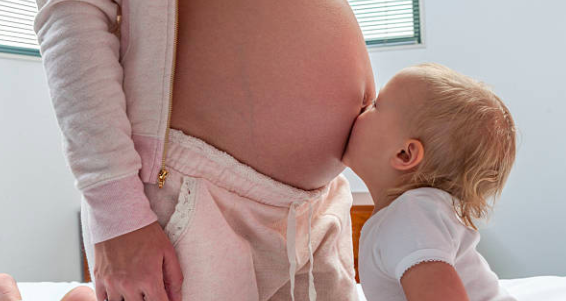 A paper published in the journal, Development, details that a foetus moving causes “molecular interactions” that help turn the cells and tissues of an embryo into functional bones and joints.
The study was conducted using chicken and mice embryos and found that movement leads to the formation of bone or cartilage.
The study also revealed that if babies don't move enough in the womb, they are at risk of developing abnormal joints or brittle bones.
A paper published in the journal, Development, details that a foetus moving causes “molecular interactions” that help turn the cells and tissues of an embryo into functional bones and joints.
The study was conducted using chicken and mice embryos and found that movement leads to the formation of bone or cartilage.
The study also revealed that if babies don't move enough in the womb, they are at risk of developing abnormal joints or brittle bones.
 Trinity College professor of zoology Paula Murphy said:
“Our new findings show that in the absence of embryonic movement the cells that should form articular cartilage receive incorrect molecular signals, where one type of signal is lost while another inappropriate signal is activated in its place. “In short, the cells receive the signal that says 'make bone' when they should receive the signal that says 'make cartilage'.”Usually, pregnant women will start to feel their baby move from anywhere between 16 to 24 weeks. If you are worried that your baby may not be moving as much as they should, you should contact your doctor.