early years
Share
The tell-tale signs that you’ve got a teething tot on your hands
Published 13:40 30 Apr 2018 BST
Updated 13:42 30 Apr 2018 BST
 Add us as a preferred source on Google »
Brought to you by Teetha.
 During teething, babies will often be much less interested in food. You’ll find their appetite has reduced and they’re becoming more fussy around mealtimes.
Raw hard foods should not be given to your baby until they have the ability to chew and swallow hard foods safely (usually after 12 months of age). But steamed vegetables/fruits work really well at about seven to eight months. To make sure they're just right, try squashing them between your finger and thumb to ensure they're soft and turn to mush.
You might think this introduction to food is destined to be a failure at this point, but foods like carrots, red pepper, apple, cucumber and celery can provide pressure to the gums, as baby chews, which helps relieve pain.
Baby is also likely to be somewhat irritable. This will be due to the fact that, firstly, they’re in pain (no fun for anyone) and this pain is likely to keep them awake for longer at night.
With a lack of sleep and a desire to have those gums back to normal, we can expect a cranky baba on our hands. If you think it’s time that baby had some soothing relief from pain, try Teetha’s Teething Granules . It's a homeopathic medicinal product used to relieve symptoms associated with teething. They come in sachets and if your baby is within the three to six month age bracket, you can simply sit them upright, and then slowly, using a spoon, give them half a sachet at a time into the front of their mouth. When this has fully dissolved, you can give the rest.
During teething, babies will often be much less interested in food. You’ll find their appetite has reduced and they’re becoming more fussy around mealtimes.
Raw hard foods should not be given to your baby until they have the ability to chew and swallow hard foods safely (usually after 12 months of age). But steamed vegetables/fruits work really well at about seven to eight months. To make sure they're just right, try squashing them between your finger and thumb to ensure they're soft and turn to mush.
You might think this introduction to food is destined to be a failure at this point, but foods like carrots, red pepper, apple, cucumber and celery can provide pressure to the gums, as baby chews, which helps relieve pain.
Baby is also likely to be somewhat irritable. This will be due to the fact that, firstly, they’re in pain (no fun for anyone) and this pain is likely to keep them awake for longer at night.
With a lack of sleep and a desire to have those gums back to normal, we can expect a cranky baba on our hands. If you think it’s time that baby had some soothing relief from pain, try Teetha’s Teething Granules . It's a homeopathic medicinal product used to relieve symptoms associated with teething. They come in sachets and if your baby is within the three to six month age bracket, you can simply sit them upright, and then slowly, using a spoon, give them half a sachet at a time into the front of their mouth. When this has fully dissolved, you can give the rest.
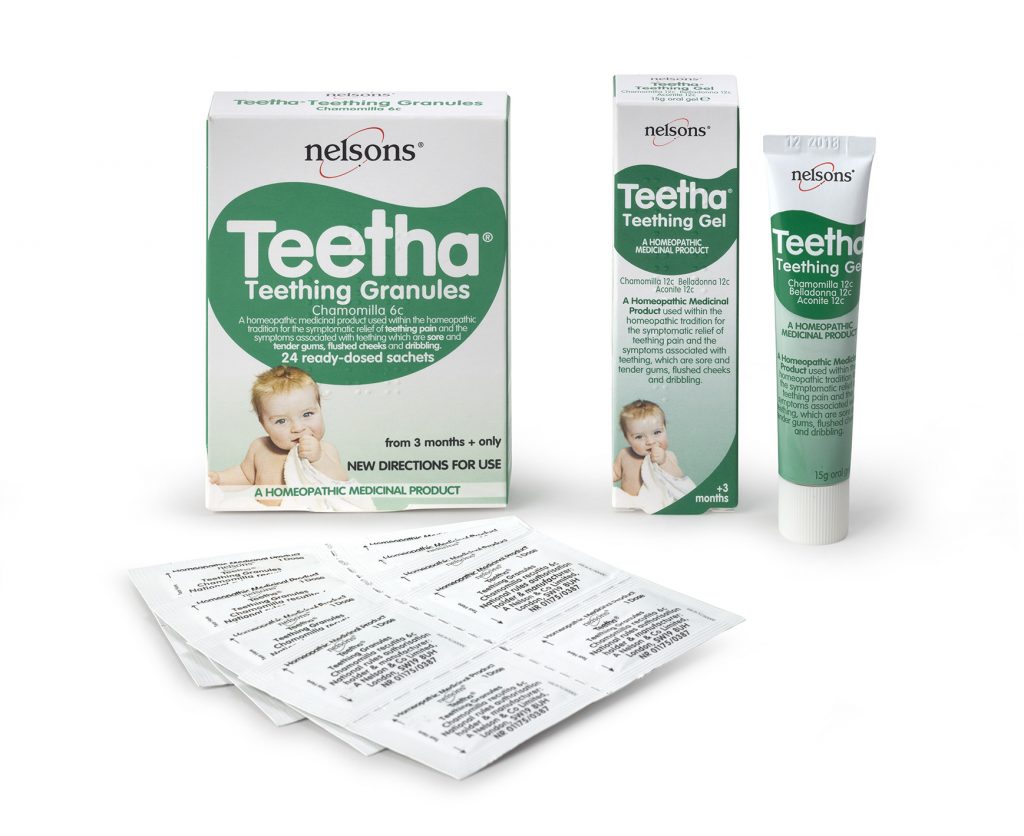 If your baby is older, you can pour the sachet into their mouth a little bit at a time, ensuring the granules are dissolving in their mouth.
Alternatively, Teetha’s Teething Gel can also be applied using your clean finger and gently dabbing on to the sore area of the gums and teeth. It’s sugar-free and super handy for applying when on the go or running errands.
During the time when baby is growing 20 milk teeth and all of them are slowly, but surely making their way to the surface, they’ll want to chew, gnaw and bite everything in sight. It’s perfectly normal for them to do this, but to ensure they don’t go chewing something dirty or dangerous, you can find teethers and teething rings in just about any retailers supplying baby products.
Babies might start grabbing their ears, rubbing their eyes and pushing their hands against their face when they’re teething. They know the pain is coming from that area, and they’re probably curious as to what this is. They help themselves the only way they know how, and that means wriggling, biting and rubbing the area.
Brought to you by Teetha.
If your baby is older, you can pour the sachet into their mouth a little bit at a time, ensuring the granules are dissolving in their mouth.
Alternatively, Teetha’s Teething Gel can also be applied using your clean finger and gently dabbing on to the sore area of the gums and teeth. It’s sugar-free and super handy for applying when on the go or running errands.
During the time when baby is growing 20 milk teeth and all of them are slowly, but surely making their way to the surface, they’ll want to chew, gnaw and bite everything in sight. It’s perfectly normal for them to do this, but to ensure they don’t go chewing something dirty or dangerous, you can find teethers and teething rings in just about any retailers supplying baby products.
Babies might start grabbing their ears, rubbing their eyes and pushing their hands against their face when they’re teething. They know the pain is coming from that area, and they’re probably curious as to what this is. They help themselves the only way they know how, and that means wriggling, biting and rubbing the area.
Brought to you by Teetha.
It’s a phase every little tot must go through.
You might think it makes little difference to know the signs of a teething tot - after all baby is sure to let you know as those teeth get more and more painful as the push their way through those delicate little gums. But, if you can spot the tell-tale signs early, or a at least nearer to the initial teething stage, it gives us mamas and papas time to prepare some comforting remedies for baby. Look out for an increase in the amount of drool you’re used to seeing about the place. Next time you lay down on the couch baby is likely to have it wet and cold from all the extra salvia their mouths will be making. They’ll constantly be popping their little hands into their mouth in an attempt to comfort their poor gums.
During teething, babies will often be much less interested in food. You’ll find their appetite has reduced and they’re becoming more fussy around mealtimes.
Raw hard foods should not be given to your baby until they have the ability to chew and swallow hard foods safely (usually after 12 months of age). But steamed vegetables/fruits work really well at about seven to eight months. To make sure they're just right, try squashing them between your finger and thumb to ensure they're soft and turn to mush.
You might think this introduction to food is destined to be a failure at this point, but foods like carrots, red pepper, apple, cucumber and celery can provide pressure to the gums, as baby chews, which helps relieve pain.
Baby is also likely to be somewhat irritable. This will be due to the fact that, firstly, they’re in pain (no fun for anyone) and this pain is likely to keep them awake for longer at night.
With a lack of sleep and a desire to have those gums back to normal, we can expect a cranky baba on our hands. If you think it’s time that baby had some soothing relief from pain, try Teetha’s Teething Granules . It's a homeopathic medicinal product used to relieve symptoms associated with teething. They come in sachets and if your baby is within the three to six month age bracket, you can simply sit them upright, and then slowly, using a spoon, give them half a sachet at a time into the front of their mouth. When this has fully dissolved, you can give the rest.
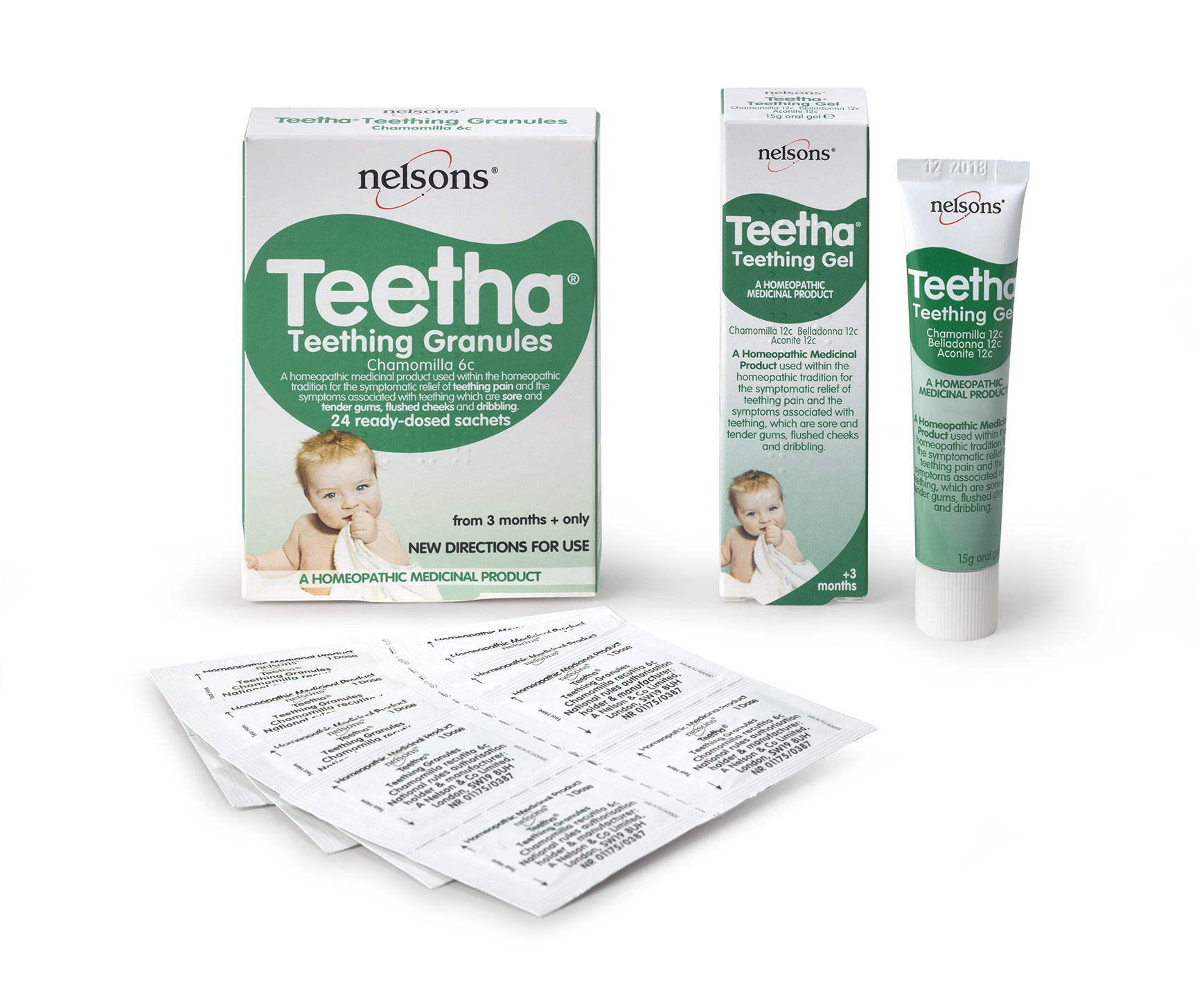 If your baby is older, you can pour the sachet into their mouth a little bit at a time, ensuring the granules are dissolving in their mouth.
Alternatively, Teetha’s Teething Gel can also be applied using your clean finger and gently dabbing on to the sore area of the gums and teeth. It’s sugar-free and super handy for applying when on the go or running errands.
During the time when baby is growing 20 milk teeth and all of them are slowly, but surely making their way to the surface, they’ll want to chew, gnaw and bite everything in sight. It’s perfectly normal for them to do this, but to ensure they don’t go chewing something dirty or dangerous, you can find teethers and teething rings in just about any retailers supplying baby products.
Babies might start grabbing their ears, rubbing their eyes and pushing their hands against their face when they’re teething. They know the pain is coming from that area, and they’re probably curious as to what this is. They help themselves the only way they know how, and that means wriggling, biting and rubbing the area.
Brought to you by Teetha.
If your baby is older, you can pour the sachet into their mouth a little bit at a time, ensuring the granules are dissolving in their mouth.
Alternatively, Teetha’s Teething Gel can also be applied using your clean finger and gently dabbing on to the sore area of the gums and teeth. It’s sugar-free and super handy for applying when on the go or running errands.
During the time when baby is growing 20 milk teeth and all of them are slowly, but surely making their way to the surface, they’ll want to chew, gnaw and bite everything in sight. It’s perfectly normal for them to do this, but to ensure they don’t go chewing something dirty or dangerous, you can find teethers and teething rings in just about any retailers supplying baby products.
Babies might start grabbing their ears, rubbing their eyes and pushing their hands against their face when they’re teething. They know the pain is coming from that area, and they’re probably curious as to what this is. They help themselves the only way they know how, and that means wriggling, biting and rubbing the area.
Brought to you by Teetha.Explore more on these topics: