health
Share
Breast check: Everything you need to know about mammograms and self-check
Published 12:31 9 Aug 2022 BST
Updated 14:26 9 Aug 2022 BST
 Add us as a preferred source on Google »
Being aware of changes in your body is important.
And it's especially important when you consider breast cancer. Following the passing of Olivia Newton-John, breast cancer activists are urging women to check their breasts for changes. After the age of 50, women in Ireland are invited to have a mammogram to check for changes in the breast tissue that otherwise could go unnoticed. So, what exactly is a mammogram? A mammogram is an X-ray of the breasts that can show small changes in breast tissue that may not be seen or felt by a doctor. During a mammogram, a patient will be asked to underdress to the waist. Each breast will then be placed between the two plastic surfaces of the mammogram machine. Pressure is applied in order to flatten the breast to get good X-ray pictures. According to Action Breast Cancer, some patients report feeling discomfort during the procedure, but the compression will usually last a couple of minutes, with the entire process taking about between 20 and 30. The X-ray is taken from side-to-side and top-to-bottom of each breast in order to scan for changes. In some cases, results can be issued right away but most screening services will contact patients within three weeks. What can a mammogram reveal?
The majority of mammograms will reveal nothing, but a minority do show cancerous changes that may not have been picked up by a regular breast check.
However, a mammogram can also show the presence of cysts, Fibroadenoma, or calcification.
Cysts are not related to breast cancer and can be drained by a specialist when found. Similarly, Fibroadenoma are very common in younger women and although not cancerous, can be become painful or uncomfortable if not removed.
Calcification occurs when small calcium deposits develop on the breast tissue. Most calcifications are benign, but some can be an early indicator of precancerous cells or breast cancer.
Who can get a mammogram?
In Ireland, women are invited for a mammogram once they reach the age of 50.
Women younger than 50 are not eligible for breast screening under Breast Check due to the rate of breast cancer diagnosis and mortality in women over this age.
Women will be invited to return for subsequent mammograms every two years until the age of 67.
What happens if I'm under the age of 50 and worried about breast cancer?
If you are at all worried about the symptoms of breast cancer, you should always talk to your GP.
According to the Marie Keating Foundation's senior oncology nurse Bernie Carter, if your doctor finds any changes or lumps in your breast, they can refer you for further checks or for an ultrasound. A history of familial breast cancer could also mean attending a mammogram earlier than recommended.
However, breast tissue in younger women tends to be more dense, meaning that a mammogram may not be able to pick up changes.
As above, changes in the breast tissue do not always automatically mean that cancer is present. Oftentimes, a test - via mammogram or otherwise - could reveal a cyst, painful masses called Fibroadenoma, or calcification.
None of the above strictly mean that breast cancer can develop - the majority of lumps found during breast checks are actually benign - but noting and being aware of the changes in breast tissue is still crucial.
What can a mammogram reveal?
The majority of mammograms will reveal nothing, but a minority do show cancerous changes that may not have been picked up by a regular breast check.
However, a mammogram can also show the presence of cysts, Fibroadenoma, or calcification.
Cysts are not related to breast cancer and can be drained by a specialist when found. Similarly, Fibroadenoma are very common in younger women and although not cancerous, can be become painful or uncomfortable if not removed.
Calcification occurs when small calcium deposits develop on the breast tissue. Most calcifications are benign, but some can be an early indicator of precancerous cells or breast cancer.
Who can get a mammogram?
In Ireland, women are invited for a mammogram once they reach the age of 50.
Women younger than 50 are not eligible for breast screening under Breast Check due to the rate of breast cancer diagnosis and mortality in women over this age.
Women will be invited to return for subsequent mammograms every two years until the age of 67.
What happens if I'm under the age of 50 and worried about breast cancer?
If you are at all worried about the symptoms of breast cancer, you should always talk to your GP.
According to the Marie Keating Foundation's senior oncology nurse Bernie Carter, if your doctor finds any changes or lumps in your breast, they can refer you for further checks or for an ultrasound. A history of familial breast cancer could also mean attending a mammogram earlier than recommended.
However, breast tissue in younger women tends to be more dense, meaning that a mammogram may not be able to pick up changes.
As above, changes in the breast tissue do not always automatically mean that cancer is present. Oftentimes, a test - via mammogram or otherwise - could reveal a cyst, painful masses called Fibroadenoma, or calcification.
None of the above strictly mean that breast cancer can develop - the majority of lumps found during breast checks are actually benign - but noting and being aware of the changes in breast tissue is still crucial.
 What other ways can you check your breast?
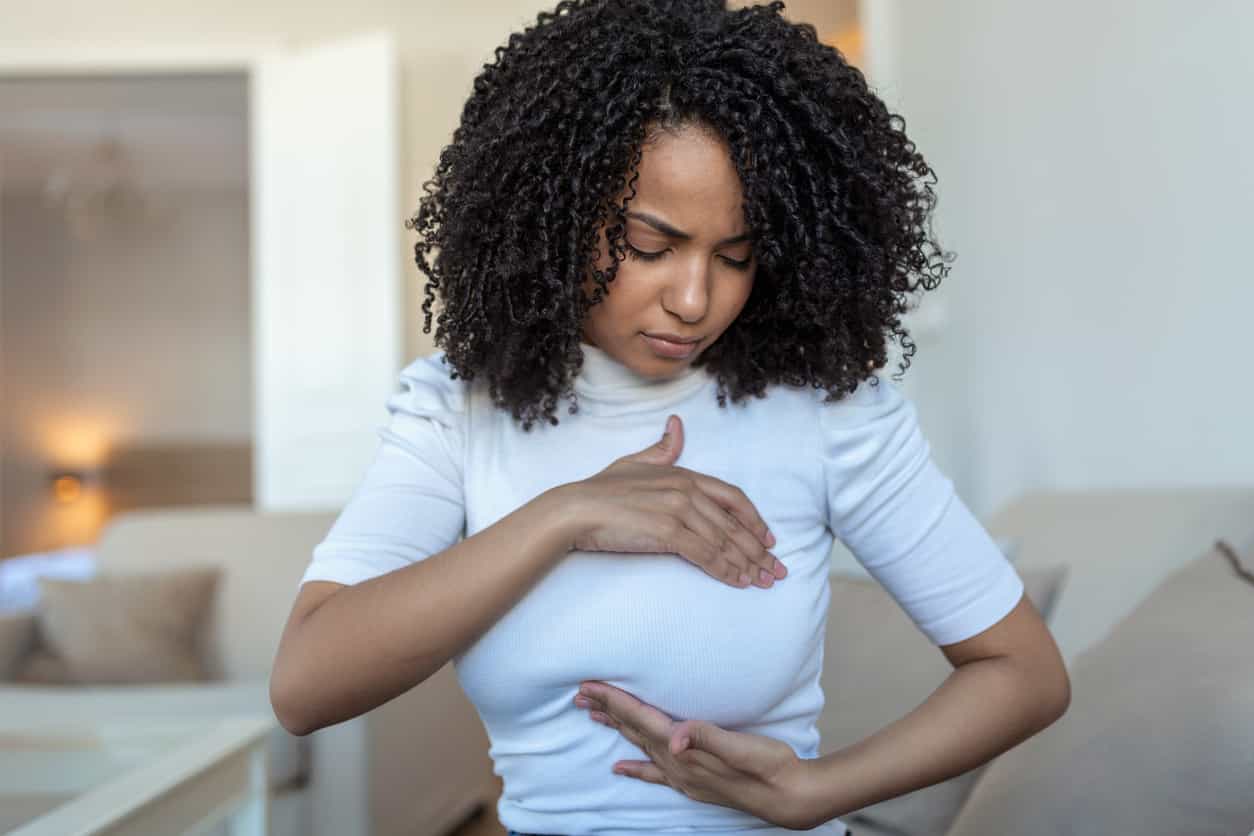
The most common way for all women to check their breasts is through self-check.
The Marie Keating Foundation say that all women should be checking their own breasts once a month, preferably the week after their period ends.
You should stand in front of the mirror and look for any physical changes in the breast, including any redness, dimpling, or puckering of the skin.
The same should be noted for nipples, alongside any crusting or changing of direction that hadn't been noticed before.
Feel the breast for any lumps, bumps, or changes in size that are abnormal. You should also check your armpits and collarbone.
It's important to note that being familiar with your breasts and body, in general, is crucial, as you won't be able to note any changes otherwise.
Alternatively, if you think you have noticed some changes or are worried about the symptoms of breast cancer in general, you can talk to your GP.
What other ways can you check your breast?
The most common way for all women to check their breasts is through self-check.
The Marie Keating Foundation say that all women should be checking their own breasts once a month, preferably the week after their period ends.
You should stand in front of the mirror and look for any physical changes in the breast, including any redness, dimpling, or puckering of the skin.
The same should be noted for nipples, alongside any crusting or changing of direction that hadn't been noticed before.
Feel the breast for any lumps, bumps, or changes in size that are abnormal. You should also check your armpits and collarbone.
It's important to note that being familiar with your breasts and body, in general, is crucial, as you won't be able to note any changes otherwise.
Alternatively, if you think you have noticed some changes or are worried about the symptoms of breast cancer in general, you can talk to your GP.Explore more on these topics: