health
Share
Crocheted octopuses are comforting premature babies at Dublin hospital
Published 12:02 17 Nov 2017 GMT
 Add us as a preferred source on Google »
Did you know that every year, over 4500 preterm babies are born in Ireland?
Statistically, this equates to a preterm baby being born every 116 minutes in Ireland’s maternity units.
Earlier this year, an idea from Denmark, where premature infants were being given crocheted octopuses to help them feel safe and comforted when in their incubators, spread and soon reached hospitals all over the world.
And after coming across the pilot scheme from Denmark, the Octo Projec, nurses at the Rotunda Hospital in Dublin showed the idea to Specialist Registrer in Paediatrics, Dr. Aisling Smith, whose own mother is a keen crocheter – and soon the idea for a "Tentacles for Tinies" project was born, with the help of a group of volunteers (check out their Facebook page, Rotunda Knitters, here).
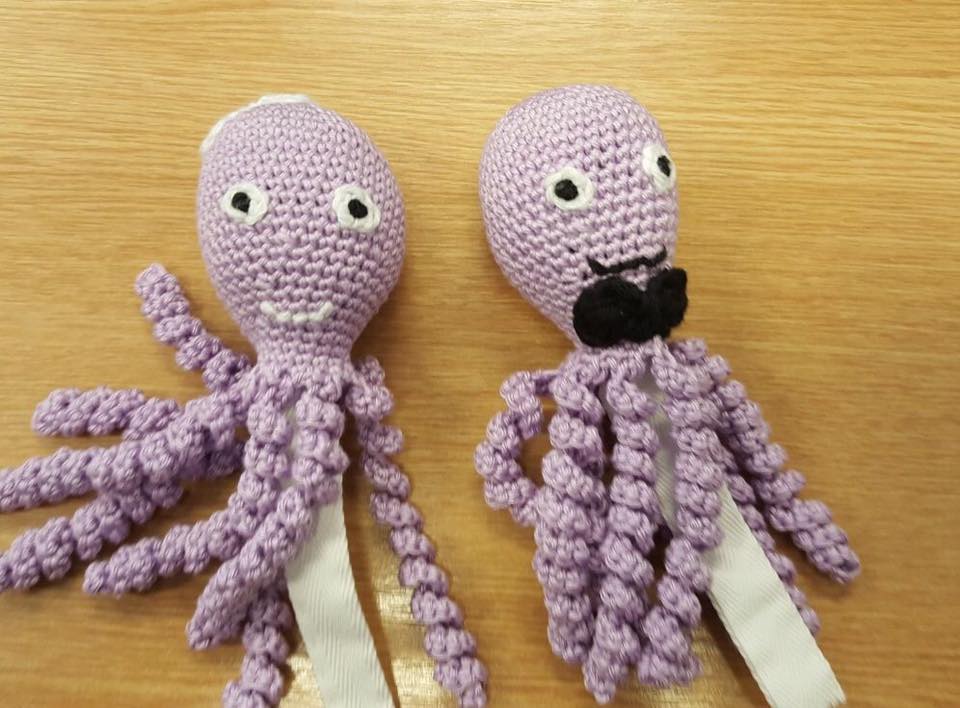 Dr. Smith recently explained the idea behind the project in an interview with RTE:
"The basic idea is that the tentcles of the crocheted octopus resemble the umbelica cord that the featus is holding onto in utero."
And although the research is still very preliminary, Dr. Smith is keen to stress it looks like it has having a positive effect on the hospitals tiniest patients.
"We've found that babies who are holding the octopus do have lower heart rates, which could indicate that they're less stressed and more comfortable and that they feel safer and more secure when they're holding the octopus."
Clinical Nurses Manager Paula Penrose also spoke as part of the RTE News feature, and explains:
"When they hold onto the tentacle, it makes them feel like they are with their mammy still."
To make the octopuses, the volunteers have to follow a strict design pattern, and to ensure the safety of the babies, only octopuses made to this standard can be used in the Tentacles for Tinies project.
Dr. Smith recently explained the idea behind the project in an interview with RTE:
"The basic idea is that the tentcles of the crocheted octopus resemble the umbelica cord that the featus is holding onto in utero."
And although the research is still very preliminary, Dr. Smith is keen to stress it looks like it has having a positive effect on the hospitals tiniest patients.
"We've found that babies who are holding the octopus do have lower heart rates, which could indicate that they're less stressed and more comfortable and that they feel safer and more secure when they're holding the octopus."
Clinical Nurses Manager Paula Penrose also spoke as part of the RTE News feature, and explains:
"When they hold onto the tentacle, it makes them feel like they are with their mammy still."
To make the octopuses, the volunteers have to follow a strict design pattern, and to ensure the safety of the babies, only octopuses made to this standard can be used in the Tentacles for Tinies project.
 And should YOU wish to help out, you can find the standard pattern for Rotunda Hospital Tentacles for Tinies Octopus project here.
Please note: Only octopuses made to these guidelines can be used in the Rotunda Hospital. This is to comply with health and safety measure to ensure the wellbeing of the babies.
And should YOU wish to help out, you can find the standard pattern for Rotunda Hospital Tentacles for Tinies Octopus project here.
Please note: Only octopuses made to these guidelines can be used in the Rotunda Hospital. This is to comply with health and safety measure to ensure the wellbeing of the babies.
Dr. Smith recently explained the idea behind the project in an interview with RTE:
"The basic idea is that the tentcles of the crocheted octopus resemble the umbelica cord that the featus is holding onto in utero."
And although the research is still very preliminary, Dr. Smith is keen to stress it looks like it has having a positive effect on the hospitals tiniest patients.
"We've found that babies who are holding the octopus do have lower heart rates, which could indicate that they're less stressed and more comfortable and that they feel safer and more secure when they're holding the octopus."
Clinical Nurses Manager Paula Penrose also spoke as part of the RTE News feature, and explains:
"When they hold onto the tentacle, it makes them feel like they are with their mammy still."
To make the octopuses, the volunteers have to follow a strict design pattern, and to ensure the safety of the babies, only octopuses made to this standard can be used in the Tentacles for Tinies project.
And should YOU wish to help out, you can find the standard pattern for Rotunda Hospital Tentacles for Tinies Octopus project here.
Please note: Only octopuses made to these guidelines can be used in the Rotunda Hospital. This is to comply with health and safety measure to ensure the wellbeing of the babies.Explore more on these topics: