Share
Researchers create ‘super vaccine’ that could stop cancer from spreading entirely
Published 11:51 17 Oct 2025 BST
 Add us as a preferred source on Google »
Results were extremely impressive
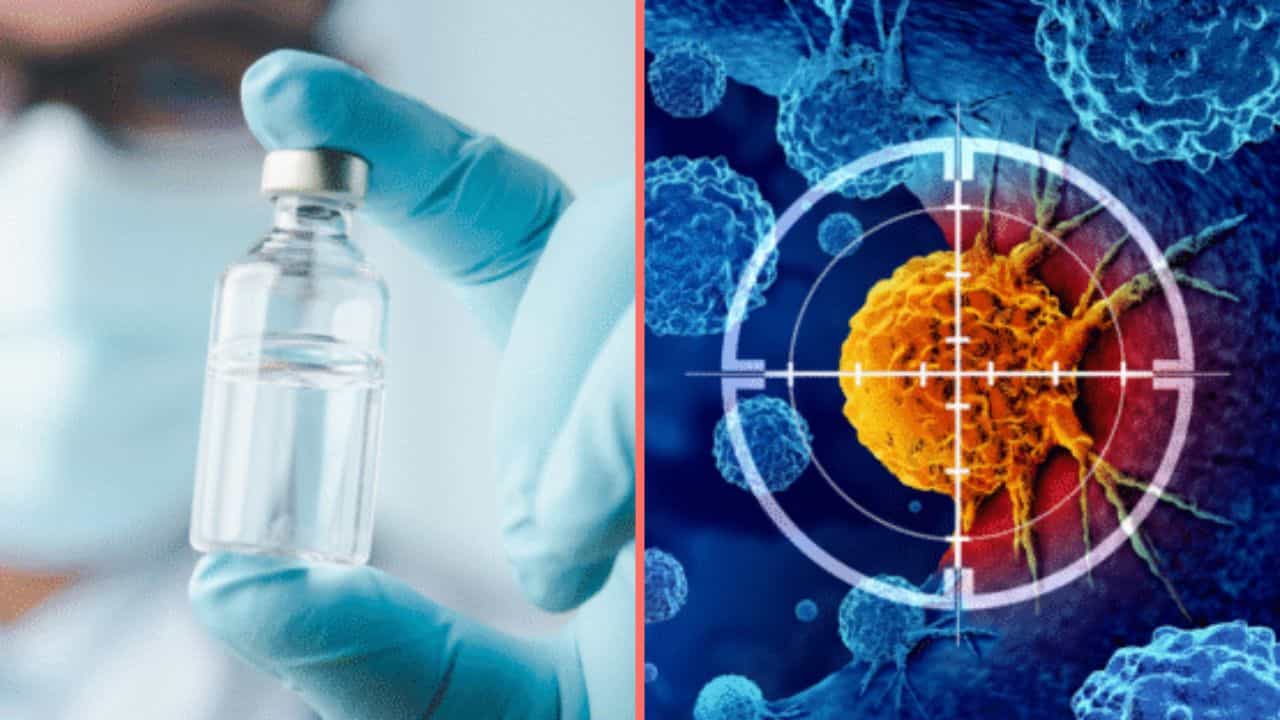
Researchers have created a 'super vaccine' that could stop cancer from spreading entirely.
Scientists at the University of Massachusetts Amherst say they have created an experimental vaccine that can prevent multiple types of aggressive cancers, including melanoma, pancreatic and triple-negative breast cancers.
The research was carried out on mice and saw 88% of vaccinated mice remain tumour-free while also reducing and completely preventing the spread of cancer in some cases.
Researcher at UMass Amherst and corresponding author on the paper, Prabhani Atukorale, said: "By engineering these nanoparticles to activate the immune system via multi-pathway activation that combines with cancer-specific antigens, we can prevent tumour growth with remarkable survival rates."
The new breakthrough that the vaccine can work preventatively comes after Autkorale's previous research which already showed that it can be used to shrink and clear cancer in mice.
Furthermore, the vaccine stopped the spread of cancer to the lungs.
The tests used a vaccine with antigens that matched the type of cancer it was targeting by using killed cancer cells sourced directly from a tumour mass to target specific types of cancer.
Researchers exposed the mice to melanoma cells systemically to mimic how cancer spreads and grows (metastasis) with the cancer only reaching the lungs in the mice that were not given the nano-particle-vaccine.
Atukorale said: "Metastases across the board is the highest hurdle for cancer.
"The vast majority of tumour mortality is still due to metastases, and it almost trumps us working in difficult-to-reach cancers, such as melanoma and pancreatic cancer.”
She went on to call this "memory immunity".
“That is a real advantage of immunotherapy, because memory is not only sustained locally,” she said.
“We have memory systemically, which is very important. The immune system spans the entire geography of the body.”
The tumour rejection rates were highly promising at 88% of mice for pancreatic cancer, 75% of mice for breast cancer and 69% of mice for melanoma.
Explore more on these topics: