news
Share
An ‘artificial womb’ could give premature babies a fighting chance
Published 08:55 26 Apr 2017 BST
 Add us as a preferred source on Google »
Scientists have invented an 'artificial womb' that mimics the environment of a mother's body, allowing very premature babies to continue developing for a few vital extra weeks.
So far the system has only been tested on lambs, but the minds behind it hope to adapt the system for humans within the next three to five years. In tests, the Children's Hospital of Philadelphia scientists placed eight baby lambs (between 105 to 120 days gestation) in sterile bags filled with an electrolyte solution, taking the place of amniotic fluid. Fetal lambs were used in the study because their prenatal lung development is very similar to that occurring in humans. Breathing amniotic fluid, the lambs' hearts pumped blood through their umbilical cord into a gas exchange machine outside the bag. Electronic monitors measured vital signs, blood flow and other crucial functions. According to the study, published in Nature Communications, the new system could prevent the severe morbidity suffered by extremely premature infants by potentially offering a medical technology that does not currently exist.
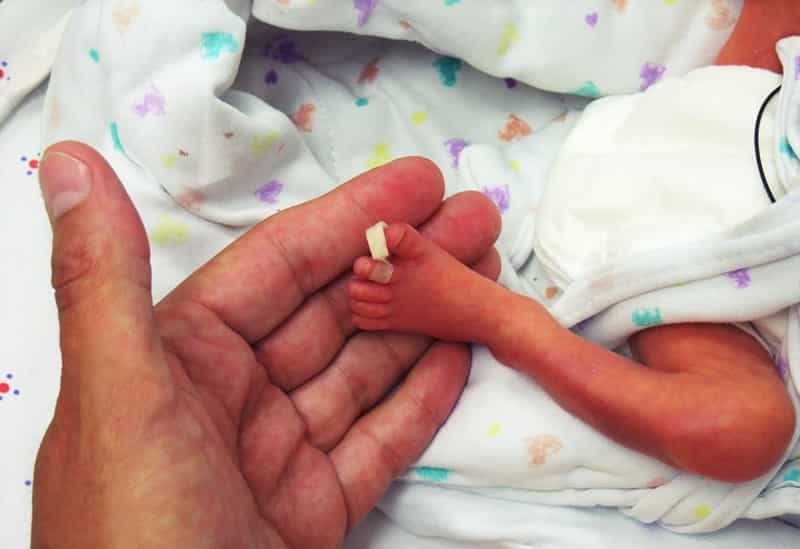
Born at 22 or 23 weeks of gestation, an infant weighs less than 600 grams and has a 30 to 50 percent chance of survival and a high risk lifelong disability.
"These infants have an urgent need for a bridge between the mother's womb and the outside world," said study leader Alan W. Flake, MD, a fetal surgeon and director of the Center for Fetal Research in the Center for Fetal Diagnosis and Treatment at Children's Hospital of Philadelphia (CHOP).
"If we can develop an extra-uterine system to support growth and organ maturation for only a few weeks, we can dramatically improve outcomes for extremely premature babies."
The goal is to support infants from 23 weeks to 28 weeks gestational age; at 28 weeks they cross the threshold away from the most severe outcomes.
Image: Children's Hospital of Philadephia
According to the study, published in Nature Communications, the new system could prevent the severe morbidity suffered by extremely premature infants by potentially offering a medical technology that does not currently exist.
Born at 22 or 23 weeks of gestation, an infant weighs less than 600 grams and has a 30 to 50 percent chance of survival and a high risk lifelong disability.
"These infants have an urgent need for a bridge between the mother's womb and the outside world," said study leader Alan W. Flake, MD, a fetal surgeon and director of the Center for Fetal Research in the Center for Fetal Diagnosis and Treatment at Children's Hospital of Philadelphia (CHOP).
"If we can develop an extra-uterine system to support growth and organ maturation for only a few weeks, we can dramatically improve outcomes for extremely premature babies."
The goal is to support infants from 23 weeks to 28 weeks gestational age; at 28 weeks they cross the threshold away from the most severe outcomes.
Image: Children's Hospital of PhiladephiaExplore more on these topics: