parenting
Share
Children don’t need exposure at home to learn a new language
Published 11:32 13 Feb 2019 GMT
Updated 18:16 13 Feb 2019 GMT
 Add us as a preferred source on Google »
Considering a Gaelscoil for your child but worried that your own cúpla focal won't be up to scratch?
Worry not, experts say children don't need exposure at home in order to learn a new language. Children who speak two languages have been shown to have cognitive advantages in many areas, including quicker problem-solving abilities and faster information processing skills. For children raised in households where two languages are spoken, bilingual learning happens almost effortlessly. But can children in single-language households develop such skills? A study by the University of Washington's Institute of Learning & Brain Sciences (I-LABS) researchers, published this week in Mind, Brain, and Education, is among the first to investigate how babies can learn a second language outside of the home. The researcher team set out to answer an important question: can babies be taught a second language if they don't get foreign language exposure at home, and if so, what kind of foreign language exposure, and how much, is needed to spark that learning?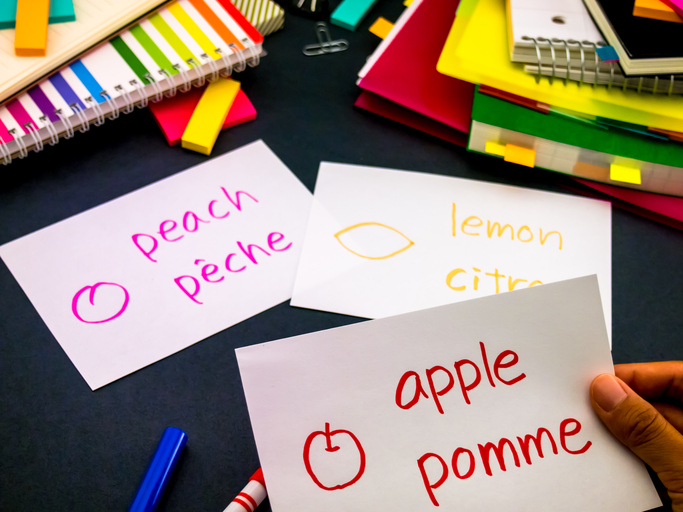 Dr Naja Ferjan Ramirez, says their findings show that even babies from one-language homes can develop bilingual abilities at this early age:
"As researchers studying early language development, we often hear from parents who are eager to provide their child with an opportunity to learn another language, but can't afford an au pair from a foreign country or don't speak a foreign language themselves. But with the right science-based approach that combines features known to grow children's language, it is possible to give very young children the opportunity to start learning a second language, with only one hour of play per day in an early education setting. This has big implications for how we think about foreign-language learning."The research team took their query all the way from Washington to Spain, where they developed a play-based, intensive, English-language method and curriculum and implemented it in four public baby-education centres in Madrid. Babies, ranging in age from seven months to just under three years of age were given one hour of English sessions a day for 18 weeks, while a control group received the Madrid schools' standard bilingual programme. Both groups of children were tested in Spanish and English at the start and end of the 18 weeks. The children also wore special vests outfitted with lightweight recorders that recorded their English learning. The recordings were analysed to determine how many English words and phrases each child spoke.
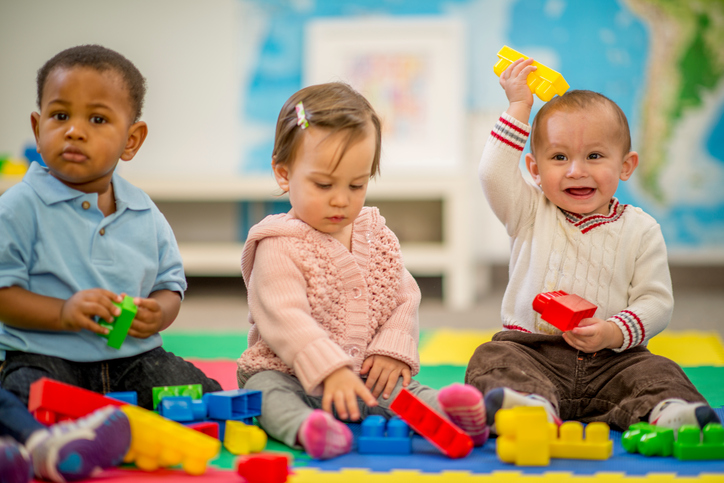 The children who received the UW method showed rapid increases in English comprehension and production, and significantly outperformed the control group peers at all ages on all tests of English. Follow-up testing 18 weeks later showed the children had retained what they learned and that their native language was not negatively affected by the introduction of a second language.
Dr Patricia Kuhl, a professor of speech and hearing sciences, says the results have the potential to transform how early language instruction is approached worldwide:
The children who received the UW method showed rapid increases in English comprehension and production, and significantly outperformed the control group peers at all ages on all tests of English. Follow-up testing 18 weeks later showed the children had retained what they learned and that their native language was not negatively affected by the introduction of a second language.
Dr Patricia Kuhl, a professor of speech and hearing sciences, says the results have the potential to transform how early language instruction is approached worldwide:
"Science indicates that babies' brains are the best learning machines ever created, and that infants' learning is time-sensitive. Their brains will never be better at learning a second language than they are between zero and three years of age. Parents around the world are eager to provide their children with an opportunity to learn a foreign language early. This new work shows we can create an early bilingual learning environment for dual-language learners in an educational setting, and in one hour per day, infants can ignite the learning of a second language earlier and much easier than we previously thought. This is doable for everybody."
Explore more on these topics: