parenting
Share
This study on what is harming our kids will scare you to your core
Published 17:00 24 Jun 2019 BST
Updated 19:46 24 Jun 2019 BST
 Add us as a preferred source on Google »
To say that smartphones (and tablets) have had a big impact on our lives is the understatement of the century.
Just think about it. How often do you check your phone throughout the day? E-mails? Instagram? Snapchat? Pinterest? Some news? A bit of Facebook? Browsing for recipes? Online shopping? We are all guilty. And it is having a major, and flat out terrifying impact on our kids. A while back, CNN interviewed Dr. Jean Twenge, author of iGen and what she has to say is, in my opinion, a major wakeup call. Dr. Twenge started doing her US-based research on children and mental health 25 years ago – looking at generational differences. There wasn't actually that much difference up until 2011 -2012 hit, when she noticed something that would scare her to the core. What is so unique about this period, you may ask? 2011 is the year when those in possession of an iPhones went over the 50 percent mark. Just take a look at some of these results and tell me they don't scare you:- 2012 was the year noticeably more kids started to say that they felt “sad, hopeless, useless… that they couldn’t do anything right (depression).”
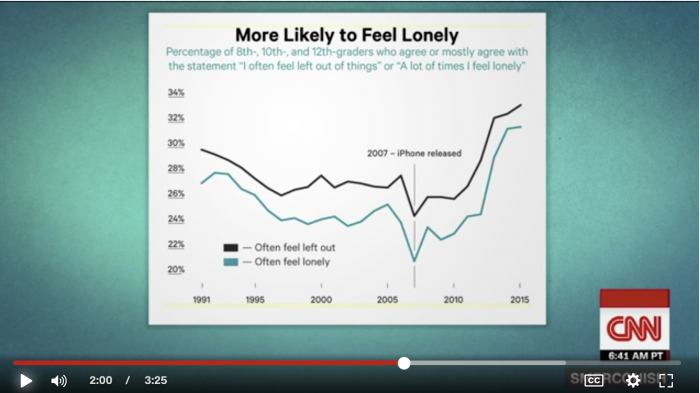
- They claim they felt left-out and lonely.
- There is a 50 percent increase in a clinical level depression between 2011-2015.
- And even more worrying – a substantial increase in suicide rate.
 Just think about what life was like when we were in school back in the 1980s or 1990s. When we left school for the day, we left, and didn't return to it until the next day. What this meant was that if there were parties or gatherings we weren't invited, we didn't know about it because we didn't have to see 500+ pictures on social media making us feel left out.
If there was drama or other kids we didn't get along with, we didn't have to see them until the next day, there were no such thing as online bullying, and every conflict or spat or mistake wasn't out there for the world to see.
We could hang out with friends or family and feel relaxed, not worrying about what we were wearing, because no-one would be taking pictures, there were no cameras there.
Now, children are always on, always connected and never gets to turn off and tune out, not even on their spare time, not even in their bedrooms at home.
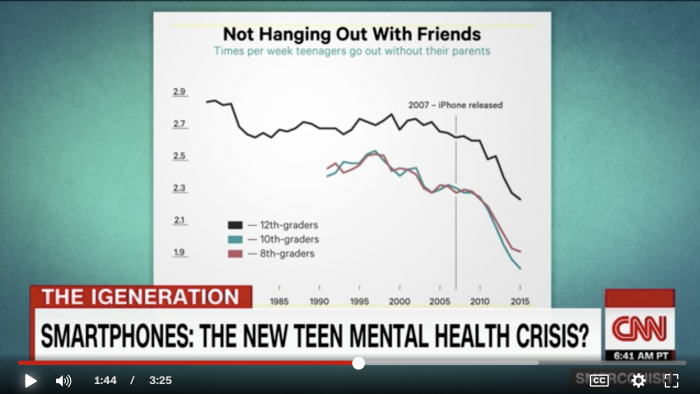
They are increasingly connecting with their friends via their devices and not face-to-face:
Just think about what life was like when we were in school back in the 1980s or 1990s. When we left school for the day, we left, and didn't return to it until the next day. What this meant was that if there were parties or gatherings we weren't invited, we didn't know about it because we didn't have to see 500+ pictures on social media making us feel left out.
If there was drama or other kids we didn't get along with, we didn't have to see them until the next day, there were no such thing as online bullying, and every conflict or spat or mistake wasn't out there for the world to see.
We could hang out with friends or family and feel relaxed, not worrying about what we were wearing, because no-one would be taking pictures, there were no cameras there.
Now, children are always on, always connected and never gets to turn off and tune out, not even on their spare time, not even in their bedrooms at home.
They are increasingly connecting with their friends via their devices and not face-to-face:
 Something which is making them feel lonely and isolated.
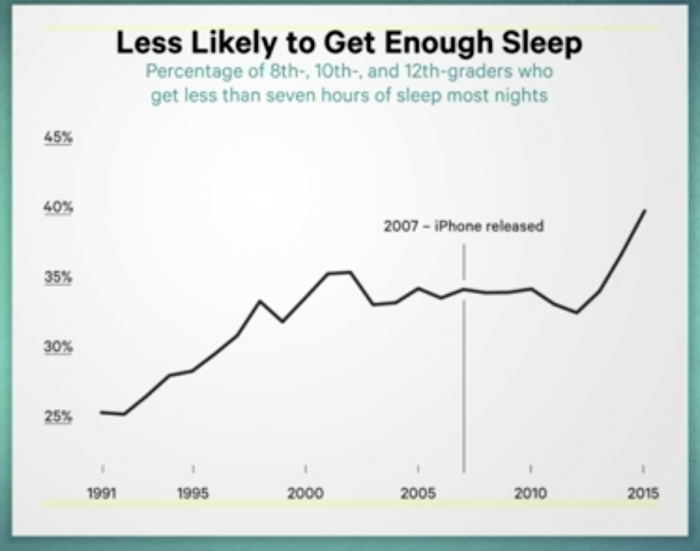
 And their sleep time has been drastically reduced – in other words; the perfect cocktail for mental health problems.
 The thing is, smartphones, gadgets, the internet – they are all here to stay. So what do we do? Well, personally, I think one of the most important things we, as parents, can do is this: Lead by example.
It may sound simplistic, but as with everything else in life, being a parent means setting an example. And simply asking your kids to be on their phones less if you are glued to yours is hardly sending the right signals, is it?
Start by showing them that time spent together, talking, playing, just being together, is important and is a priority. Put your phone away when you are all at home. Here are some more great tips on how to spend quality time together without technology getting in the way:
-Get back to what we did before phones (back to what our parents did when we were young)… spend time playing games with our kids.
-Spend dinnertime talking.
-Drop everything that you are doing when your kids get home from school or you all get home in the afternoon to TALK to them.
-Make dinner without having the TV on, the phone close by, or the tablet tuned into something.
-Use any ‘car time’ to talk to the kids (maybe even by not allowing electronics in the car)
-Have your kids do chores: Responsibilities increase their self-worth.
-Be sure that your child is getting enough sleep.
The thing is, smartphones, gadgets, the internet – they are all here to stay. So what do we do? Well, personally, I think one of the most important things we, as parents, can do is this: Lead by example.
It may sound simplistic, but as with everything else in life, being a parent means setting an example. And simply asking your kids to be on their phones less if you are glued to yours is hardly sending the right signals, is it?
Start by showing them that time spent together, talking, playing, just being together, is important and is a priority. Put your phone away when you are all at home. Here are some more great tips on how to spend quality time together without technology getting in the way:
-Get back to what we did before phones (back to what our parents did when we were young)… spend time playing games with our kids.
-Spend dinnertime talking.
-Drop everything that you are doing when your kids get home from school or you all get home in the afternoon to TALK to them.
-Make dinner without having the TV on, the phone close by, or the tablet tuned into something.
-Use any ‘car time’ to talk to the kids (maybe even by not allowing electronics in the car)
-Have your kids do chores: Responsibilities increase their self-worth.
-Be sure that your child is getting enough sleep.Explore more on these topics: