early years
Share
Irish children are now starting school at five – but why are so many parents up in arms?
Published 14:54 23 Feb 2018 GMT
 Add us as a preferred source on Google »
My little girl is in Junior Infants - but she's still aged just four.
Born in 2013, she won't turn five for another two months, meaning she's one of the youngest in her class. A few years ago - and certainly when I was in school in the Nineties - being an April baby might have put you in the younger half of your class, but not drastically so. However, more recently (for children born from 2015 onward) there has been a conscious effort to delay when our little ones are starting school: they're now increasingly likely to be five-almost-six rather than four-almost-five.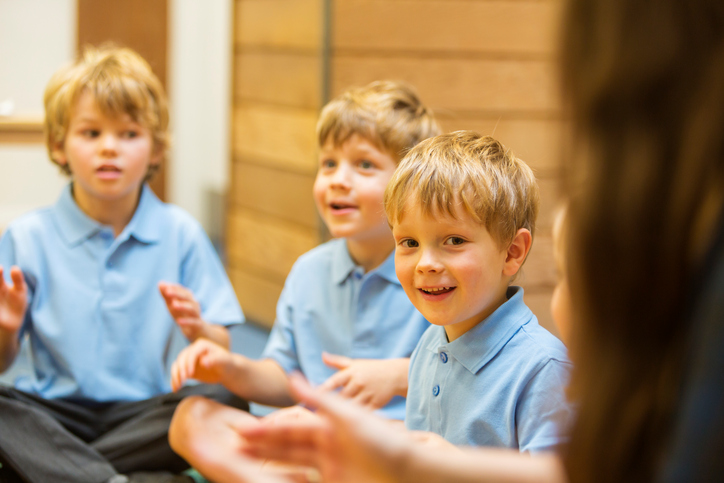 There is no denying that some of the world's most celebrated schooling systems see kids start education later. In Finland, a country that routinely tops global rankings, you begin at age seven. In Norway, it's six - the same age that applies in Belgium and Switzerland.
So a move in that direction is probably a good thing for Ireland - not least at a time when more and more kids attend the likes of creche before going on to 'big school'.
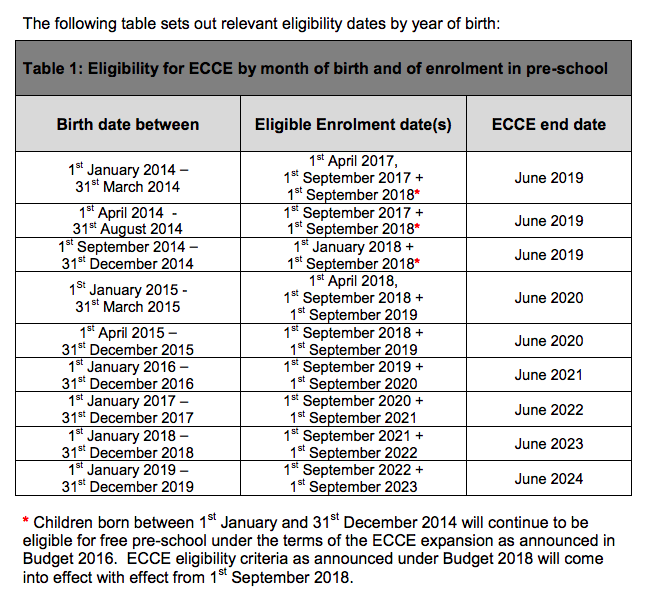
The ECCE scheme - which is being expanded and tweaked from later this year - reflects this.
There is no denying that some of the world's most celebrated schooling systems see kids start education later. In Finland, a country that routinely tops global rankings, you begin at age seven. In Norway, it's six - the same age that applies in Belgium and Switzerland.
So a move in that direction is probably a good thing for Ireland - not least at a time when more and more kids attend the likes of creche before going on to 'big school'.
The ECCE scheme - which is being expanded and tweaked from later this year - reflects this.
 Children were previously able to enroll at three different points: September, January, and April. In 2018, however, this is being reduced to a single entry point in September. You are eligible for the ECCE scheme if you are aged between two-years-and-eight-months and five-years-and-six-months.
 So why are so many mums and dads so up in arms over their kids starting school a year or two later? Especially when those parents who waited sing the virtues of their decision.
In a nutshell, there is a lot of anger because of one simple consideration - childcare. Going to school at four rather than five could save you thousands of euro (those with January babies feel particularly hard-done by).
In this country, more than 186,000 children attend early years services of some sort. Last year, according to the Early Years Sector Profile Report, the cost of full-time care increased for the first time in five years.
So why are so many mums and dads so up in arms over their kids starting school a year or two later? Especially when those parents who waited sing the virtues of their decision.
In a nutshell, there is a lot of anger because of one simple consideration - childcare. Going to school at four rather than five could save you thousands of euro (those with January babies feel particularly hard-done by).
In this country, more than 186,000 children attend early years services of some sort. Last year, according to the Early Years Sector Profile Report, the cost of full-time care increased for the first time in five years.
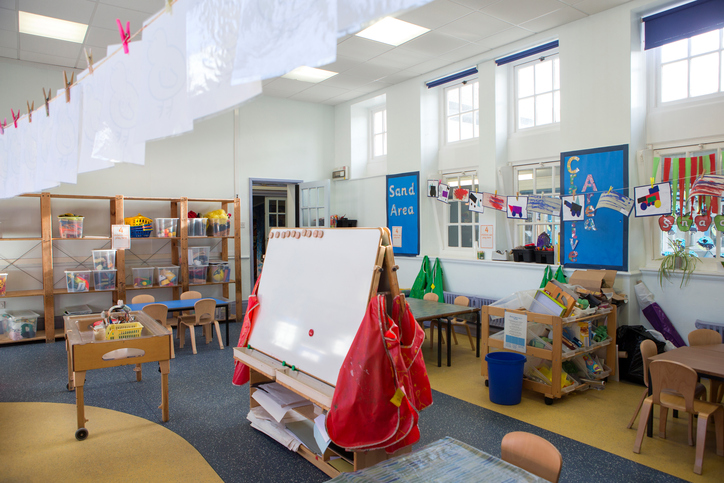 And a survey carried out by the Irish Daily Mail revealed recently that almost half (45 percent) of the income in a double-earner household with two children goes on childcare costs.
Childcare in this country is eye-wateringly expensive. Starting school later in life seems like a great idea - and one that has certainly been executed well in other countries.
However, until the issue of childcare costs is truly tackled, it remains a fact that not all parents have the luxury of holding back their kids for additional year.
And a survey carried out by the Irish Daily Mail revealed recently that almost half (45 percent) of the income in a double-earner household with two children goes on childcare costs.
Childcare in this country is eye-wateringly expensive. Starting school later in life seems like a great idea - and one that has certainly been executed well in other countries.
However, until the issue of childcare costs is truly tackled, it remains a fact that not all parents have the luxury of holding back their kids for additional year.