Share
Expert issues warning over ‘demon appliance’ worst for spiking bills
Published 11:28 15 Oct 2025 BST
Updated 11:55 15 Oct 2025 BST
 Add us as a preferred source on Google »
'It will definitely have lower electricity bills'
This article contains affiliate links. We may earn a commission on any sales generated from it.
Personal finance expert Martin Lewis has spoken out about a 'demon appliance' that should be avoided at all costs.
Speaking on his BBC Radio 5 podcast he was giving advice amid soaring energy bills as the weather gets colder - including how homeowners should switch off this 'energy hog'.
A survey for Uswitch found that households are starting the winter owing the highest debt levels in eight years, with some 3.5 million households owe money to their provider, up 46% from 2.4 million last year, the comparison site said.
Lewis said one key appliance to use as sparingly as possible is the tumble dryer, which costs £1/€1 for every load.
He told listeners: "Do you know what the real 'demon appliance' is in most people's houses - the one that you don't want to use because it's really expensive. Tumble dryers. You're typically paying up to a quid per load so dry your clothes on an airer outside, to shorten the amount of time you're using your tumble dryer, or avoid using it completely."
Live listener Rob had been noticing that his apartment has become damp since trying to dry his washing inside his home.
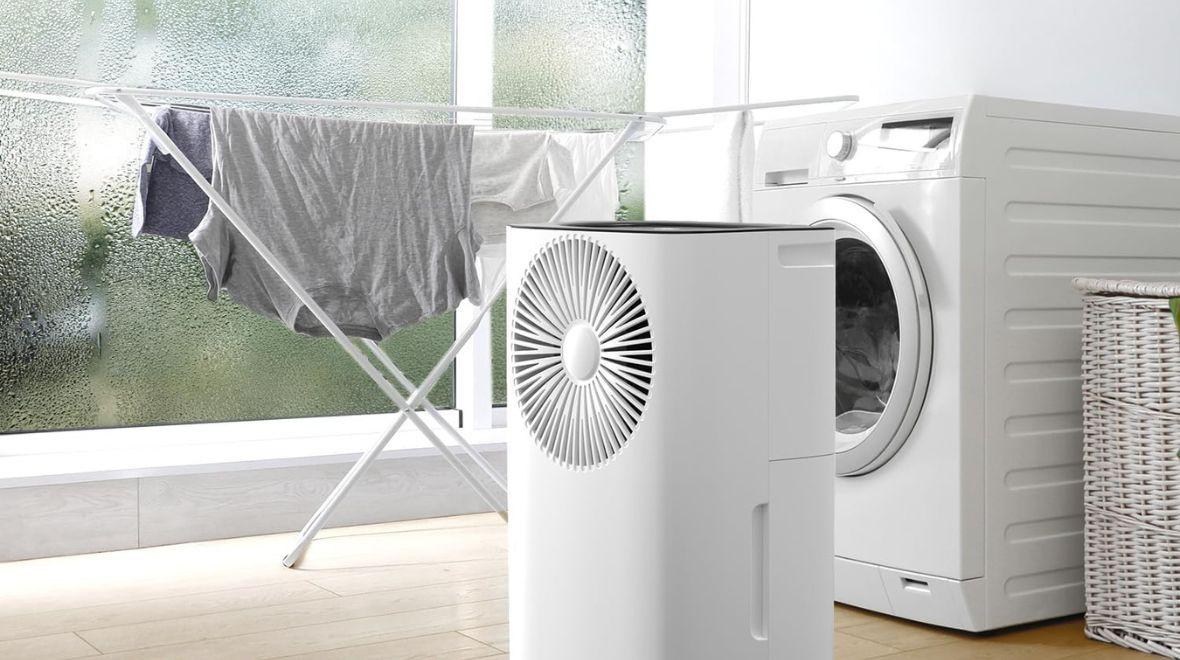
He asked: "If I were to buy a dehumidifier, would it be cheaper than using the heating to keep the place dry?"
Martin answered: "Dehumidifiers take water out of the air rather than use the heating and they're much lower wattage appliances than standard heating. So if the dehumidifier works for you, it will definitely have lower electricity bills."
You can currently get this popular dehumidifier from Amazon at a 20% discount for €54.01, with a 1.2L capacity, or this one for €82.75 with a 12L capacity.
They help remove the moisture from the air and will help dry your clothes, while also stopping damp and mould from growing in your home.
"Those who have dehumidifiers can take some of the moisture out of the air. It's less wattage than a tumble dryer, so it can be more cost-effective," Lewis said.

Another issue is radiators heating areas which do nothing to raise the temperature inside your home, instead the heat escapes outside quickly.
Speaking previously on his BBC Podcast, Mr Lewis has said that people should consider using reflective panels behind radiators - to send the heat backing into the room rather than through the wall to outside.
He said: "A tip for you reflective panels behind radiators. Sheets of reflective material can be placed behind radiators. Crucially, this is on external wall radiators, so the heat doesn't escape. If you don't want to pay for those, then tin foil can work, although it doesn’t work quite as well."
Currently a 5 metre long roll of the radiator heat reflector foil can be bought at Amazon for €16.08, which is a bestseller and shoppers have said it 'improves heat retention'.
He also added: "If you've got radiators in rooms that you're not using, go and turn them off before you turn the heating on so you're not wasting cash overheating empty spaces.
"Changing the flow rate on your boiler can cut gas bill by over 9% and you won't notice the change."
Other general tips from the expert included: "Check your TV's on a low energy setting too and walk around your house. Be a draft detector - what drafts can you spot as you walk around your house? And then try, if you can, to seal them up."
Explore more on these topics: