health
Share
First person: How practising self compassion has helped me to overcome my pandemic anxiety
Published 17:07 7 May 2020 BST
Updated 17:12 7 May 2020 BST
 Add us as a preferred source on Google »
"I have broken out the “good” shower gel and body lotion, previously unopened gifts that I was saving – for what, I do not know."
Dr Eithne Hunt is an Occupational Therapy lecturer at UCC and a mum of one. You can follow her on Twitter here. Below, she outlines how practising self-compassion and self-care have helped her to cope with the anxiety of the Covid-19 pandemic... In September 2008 I sat glued to the television, watching Lehman Brothers’ employees carrying their cardboard boxes from their offices. One of my best friends was working in Bear Stearns Bank when it had failed, and so the reality of the unfolding economic crisis felt very close to home. I felt on-edge and full of dread as the global economy fell apart. At the end of February, when Coronavirus arrived on our island, that feeling of dread returned. Instead of the television, I was now in a loop of checking my phone. I had a knot of anxiety in my stomach and for a few days, woke up with a sinking feeling, weighed down by the scale of the global public health crisis. But this time around, I responded differently to my distress. Instead of berating myself for not being able to just deal with it, I placed a hand on my tummy and acknowledged that, yes, this was anxiety, many people were likely feeling similarly, and then I offered myself some soothing words of comfort. In short, I took a self-compassion break. Three steps to self-compassion In recent years, I have read a lot and done some training in mindfulness, and learning about self-compassion has been truly transformative. Christopher Germer and Kristin Neff are the leading scholars in self-compassion, which they describe as comprising three elements: mindfulness, common humanity and kindness. Firstly, we learn to recognise our own suffering without exaggerating or minimising it (mindfulness). Then, we remind ourselves that we are not alone or weak or flawed for feeling pain, worry, anger or sadness (common humanity). Lastly, we offer ourselves compassion through physical soothing gestures or comforting words (kindness). In essence, as Karen Bluth describes in her adaptation of The Mindful Self-Compassion programme, it is learning to make friends with ourselves. And so, by allowing the feelings of anxiety to be there without the harsh companion of my inner critic, the persistent knot of anxiety passed. Fresh waves of it still come of course, and in those moments I try to repeat the three-step self-compassion break. I’ve also cried and been cranky with my loved ones more than once these past few weeks. In those moments, too, I try to be compassionate to myself (and afterwards, apologetic to my family!). [caption id="attachment_376607" align="alignnone" width="999"] Dr Eithne Hunt[/caption]
Replacing “what if?” with “what is”
When the waves of anxiety come, another strategy I use is to notice the “what if?” thinking spiral, and replace it with “what is”. Anxiety can be understood as the overestimation that something terrible is going to happen, and the underestimation of one’s ability to cope.
Some “what ifs?” I’ve noticed include “what if my parents become unwell when none of us are able to be with them?”, “what if our son gets COVID-19 and we can’t stay with him in hospital?”, “what if my brother (a frontline medic) gets sick?”, “what if my (self-employed) husband’s business goes under?”.
Each time, I try to gently come back to what is – what I know to be true, for now. Grounding techniques can also be helpful to break the rapid spiral of catastrophic thinking and physical unease that typify anxiety.
Building new habits and routines
I’ve also been struck by the tiredness I am feeling. On the face of it, I am not as busy as I was pre-Covid-19; and luckily, I am sleeping well so that doesn’t explain it. But I’ve been reminded of the role that habit and routine play in making some daily processes and activities automatic, therefore requiring little conscious thought or mental effort.
Think, for example, about your usual morning routine – it typically has a sequence and flow that enables you to shower, dress, eat and get out of the house in a relatively time- and energy-efficient manner. But now, with routines turned upside-down, a lot of mental energy is consumed by previously taken-for-granted activities. My family and I have figured out a rough daily schedule now, and that is definitely helping.
Dr Eithne Hunt[/caption]
Replacing “what if?” with “what is”
When the waves of anxiety come, another strategy I use is to notice the “what if?” thinking spiral, and replace it with “what is”. Anxiety can be understood as the overestimation that something terrible is going to happen, and the underestimation of one’s ability to cope.
Some “what ifs?” I’ve noticed include “what if my parents become unwell when none of us are able to be with them?”, “what if our son gets COVID-19 and we can’t stay with him in hospital?”, “what if my brother (a frontline medic) gets sick?”, “what if my (self-employed) husband’s business goes under?”.
Each time, I try to gently come back to what is – what I know to be true, for now. Grounding techniques can also be helpful to break the rapid spiral of catastrophic thinking and physical unease that typify anxiety.
Building new habits and routines
I’ve also been struck by the tiredness I am feeling. On the face of it, I am not as busy as I was pre-Covid-19; and luckily, I am sleeping well so that doesn’t explain it. But I’ve been reminded of the role that habit and routine play in making some daily processes and activities automatic, therefore requiring little conscious thought or mental effort.
Think, for example, about your usual morning routine – it typically has a sequence and flow that enables you to shower, dress, eat and get out of the house in a relatively time- and energy-efficient manner. But now, with routines turned upside-down, a lot of mental energy is consumed by previously taken-for-granted activities. My family and I have figured out a rough daily schedule now, and that is definitely helping.
 Paying attention to self-care
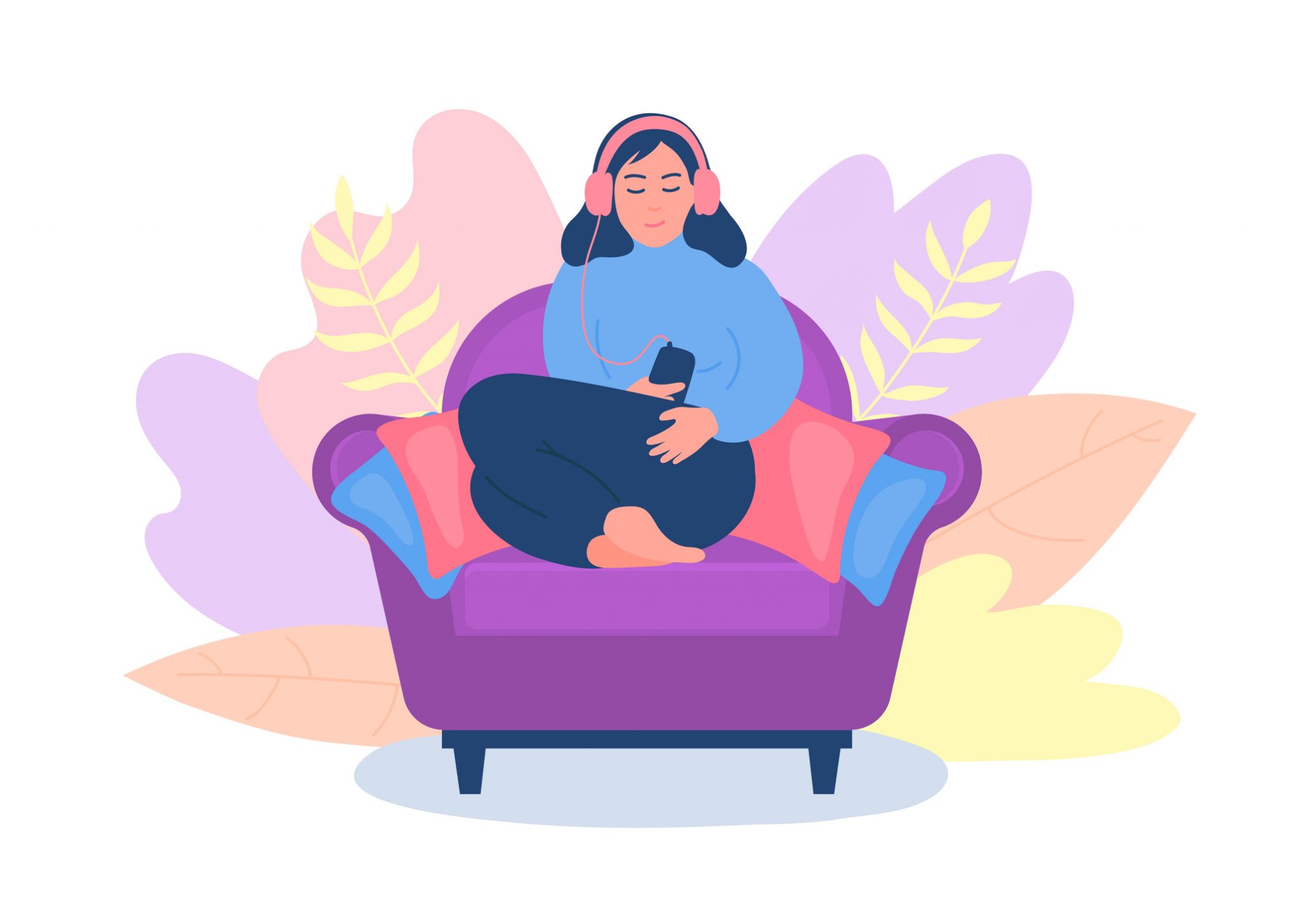
With energy levels depleted by worry and fatigue, I am trying to pay more attention to self-care. I have broken out the “good” shower gel and body lotion, previously unopened gifts that I was saving – for what, I do not know. Their time is now!
And although I don’t naturally enjoy exercise, I am trying to make myself go out for a walk every day, viewing it not as a chore but as a daily pleasure. I’m not pushing myself to walk at a certain pace. Instead, I choose an engaging podcast and set out – deliberately saying “hello” to those I meet – feeling increasingly grateful that I have the freedom and health to be able to walk. I’m also mindful of the enormous benefits of even small amounts of physical activity for mental health.
Collectively, these practices are helping me keep myself together, and when I do fall apart, to gather myself back up again. And again. And again.
Paying attention to self-care
With energy levels depleted by worry and fatigue, I am trying to pay more attention to self-care. I have broken out the “good” shower gel and body lotion, previously unopened gifts that I was saving – for what, I do not know. Their time is now!
And although I don’t naturally enjoy exercise, I am trying to make myself go out for a walk every day, viewing it not as a chore but as a daily pleasure. I’m not pushing myself to walk at a certain pace. Instead, I choose an engaging podcast and set out – deliberately saying “hello” to those I meet – feeling increasingly grateful that I have the freedom and health to be able to walk. I’m also mindful of the enormous benefits of even small amounts of physical activity for mental health.
Collectively, these practices are helping me keep myself together, and when I do fall apart, to gather myself back up again. And again. And again.Explore more on these topics: